
Publications
THE WALL STREET JOURNAL
The post-reading generation talks about the future of books
This post originally appeared on SIMCentre.ca. Today I got to be a (tweeting) fly on the wall in Jonathan Aitken's ebook design class. Somewhat to my amusement, Jonathan began by explaining how old people like us used to read in linear way, where you flip through...
How will computer use affect the way people are wired?
I just finished taking the Future of the Internet survey that is run by the Pew Research Center's Internet & American Life Project and Elon University's Imagining the Internet Center. One of the questions asked about the impact of technology use on the kids and...

Social media for political scientists: monitoring with iGoogle, Google Reader and Hootsuite
Troubleshooting calendar syncing with Google Calendar, iCal, MobileMe and BusySync
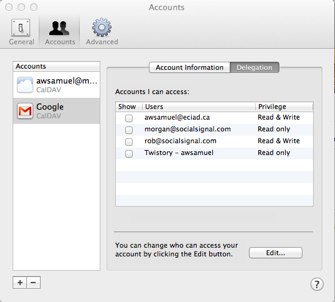
A couple of nights ago I spent an hour cleaning up what I initially alleged to be a problem with Google's calendaring servers, but which closer examination revealed to be a case of user error. And I must reluctantly admit that user was me: in my infinite enthusiasm...
4 ways your computer can help you to protect your time
Feel like email and social media are stealing your time? Great news: your communications technologies can give time back, too. I'm not talking about productivity boosters or clever ways of getting even more work done in even less time. I'm talking about protecting...

Back to school at the juncture of art & social science
Walking through the front doors of Emily Carr today after a few days in political science land was a reawakening to the extraordinary.The gallery by the front doors was bursting with fresh pieces, including something that requires you to put on headphones and look at...

Social media for political scientists

Live blog: Cyber Security in a Wikileaks World
I am at the APSA panel on Cyber Security in a Wikileaks World, which I will be live blogging for the next couple of hours. Tweet me your questions aboutany of the papers (you can download them, or just follow along here) and I will happily ask them when the time...
10 ways to tell the difference between APSA and SWSWi
I am spending this week at the
Anticipating the virtual wedding
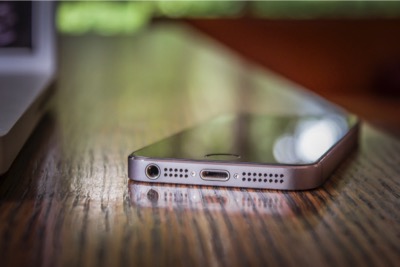
Today's Globe & Mail features a story about the "iPad bridesmaid": the woman who attended her friend's wedding via iPad. Since Renee Armstrong couldn't make it the wedding in person, a groomsman carried an iPad to which she was connected via FaceTime (Apple's...
The Harvard Business Review
The post-reading generation talks about the future of books
This post originally appeared on SIMCentre.ca. Today I got to be a (tweeting) fly on the wall in Jonathan Aitken's ebook design class. Somewhat to my amusement, Jonathan began by explaining how old people like us used to read in linear way, where you flip through...
How will computer use affect the way people are wired?
I just finished taking the Future of the Internet survey that is run by the Pew Research Center's Internet & American Life Project and Elon University's Imagining the Internet Center. One of the questions asked about the impact of technology use on the kids and...
Social media for political scientists: monitoring with iGoogle, Google Reader and Hootsuite
Troubleshooting calendar syncing with Google Calendar, iCal, MobileMe and BusySync
A couple of nights ago I spent an hour cleaning up what I initially alleged to be a problem with Google's calendaring servers, but which closer examination revealed to be a case of user error. And I must reluctantly admit that user was me: in my infinite enthusiasm...
4 ways your computer can help you to protect your time
Feel like email and social media are stealing your time? Great news: your communications technologies can give time back, too. I'm not talking about productivity boosters or clever ways of getting even more work done in even less time. I'm talking about protecting...
Back to school at the juncture of art & social science
Walking through the front doors of Emily Carr today after a few days in political science land was a reawakening to the extraordinary.The gallery by the front doors was bursting with fresh pieces, including something that requires you to put on headphones and look at...
Social media for political scientists
Live blog: Cyber Security in a Wikileaks World
I am at the APSA panel on Cyber Security in a Wikileaks World, which I will be live blogging for the next couple of hours. Tweet me your questions aboutany of the papers (you can download them, or just follow along here) and I will happily ask them when the time...
10 ways to tell the difference between APSA and SWSWi
I am spending this week at the
Anticipating the virtual wedding
Today's Globe & Mail features a story about the "iPad bridesmaid": the woman who attended her friend's wedding via iPad. Since Renee Armstrong couldn't make it the wedding in person, a groomsman carried an iPad to which she was connected via FaceTime (Apple's...
OneZero
Blockbuster reminds us to make way for the new
Ever since it was announced that Blockbuster would close its remaining stores, I've wondered what would happen at the corner of Broadway and Blenheim. A wifi-wielding coffee shop? A wildly out-of-place H&M? An all-you-can-eat, gluten- and sugar-free cake buffet?...

Video: 10 reasons to stop apologizing for your online life
It's time to stop apologizing for your life online. That was the central message of my talk at TEDx Victoria in November, now on YouTube. From valuing your online attention to taking your online creativity seriously as real art, I argue that we can only unlock the...
Excel template: 7 steps to achieving your goals
Do you have trouble making good on your New Year's resolutions? Do you have a hard time staying focused on your most important work? Do you simply get overwhelmed by all the tasks on your plate, and worry about how to get them all done? When I'm trying to stay on...

Social media gives information workers the experience of materiality
Today's practice: If you haven't created something lately, try creating something online. At our all-university kick-off meeting for Emily Carr's spring semester, President Ron Burnett talked about the university's work in terms of materiality; in terms of the work,...
How self-reliance hurts online community
Today's practice: The next time you spend more than 15 minutes struggling with a tech challenge, stop trying to solve it yourself and ask someone for help. When our home media server froze as we were trying to watch a mother-daughter show tonight, I swung into...

How much social media is enough?
Today's practice: Focus on quality, not quantity. Today's tweets are full of references to New Year's resolutions: "Tweet more". "Tweet less". "Blog more". "Blog less." "Check Facebook no more than once a day." "Check Facebook at least once a day." You get the idea....

Top 2011 posts from other sites
For the past week, I've been rounding up the top posts from 2011 on this site -- both your favourites and my own. Today, I'm closing out the year by sharing 11 of the best posts I've read elsewhere this year. There are many others that belong on this list, too! Social...

Our online future: Top 2011 posts on the Internet and society
JSTOR DAILY
Blockbuster reminds us to make way for the new
Ever since it was announced that Blockbuster would close its remaining stores, I've wondered what would happen at the corner of Broadway and Blenheim. A wifi-wielding coffee shop? A wildly out-of-place H&M? An all-you-can-eat, gluten- and sugar-free cake buffet?...
Video: 10 reasons to stop apologizing for your online life
It's time to stop apologizing for your life online. That was the central message of my talk at TEDx Victoria in November, now on YouTube. From valuing your online attention to taking your online creativity seriously as real art, I argue that we can only unlock the...
Excel template: 7 steps to achieving your goals
Do you have trouble making good on your New Year's resolutions? Do you have a hard time staying focused on your most important work? Do you simply get overwhelmed by all the tasks on your plate, and worry about how to get them all done? When I'm trying to stay on...
Social media gives information workers the experience of materiality
Today's practice: If you haven't created something lately, try creating something online. At our all-university kick-off meeting for Emily Carr's spring semester, President Ron Burnett talked about the university's work in terms of materiality; in terms of the work,...
How self-reliance hurts online community
Today's practice: The next time you spend more than 15 minutes struggling with a tech challenge, stop trying to solve it yourself and ask someone for help. When our home media server froze as we were trying to watch a mother-daughter show tonight, I swung into...
How much social media is enough?
Today's practice: Focus on quality, not quantity. Today's tweets are full of references to New Year's resolutions: "Tweet more". "Tweet less". "Blog more". "Blog less." "Check Facebook no more than once a day." "Check Facebook at least once a day." You get the idea....
Top 2011 posts from other sites
For the past week, I've been rounding up the top posts from 2011 on this site -- both your favourites and my own. Today, I'm closing out the year by sharing 11 of the best posts I've read elsewhere this year. There are many others that belong on this list, too! Social...
Our online future: Top 2011 posts on the Internet and society
THE VERGE

Using Online Resources to Stay Focused on Your Goals
Tech expert Alexandra Samuel shares six new strategies for using online resources to stay focused on your goals and inspired in your life.
Source: Using Online Resources to Stay Focused on Your Goals

5 Ways the Web Can Help You Celebrate Dad
Technology expert Alexandra Samuel shares five ways the web can help you celebrate dad this Father’s Day.

Living Low-Tech – Go Online and Get Crafty
Just because you live a high-tech life doesn’t mean you can’t go low-tech with great results. Alexandra Samuel shares a few places you can go online to get crafty.
Opinion: Should you care about Pinterest? | Macworld
Like Twitter is a new media newspaper, Pinterest is a new media glossy magazine. “Pinterest is the next step in the evolution of women’s magazines,” said Alexandra Samuel, Director of the Social and Interactive Media Centre at Emily Carr University. Women’s magazines...