
Publications
THE WALL STREET JOURNAL
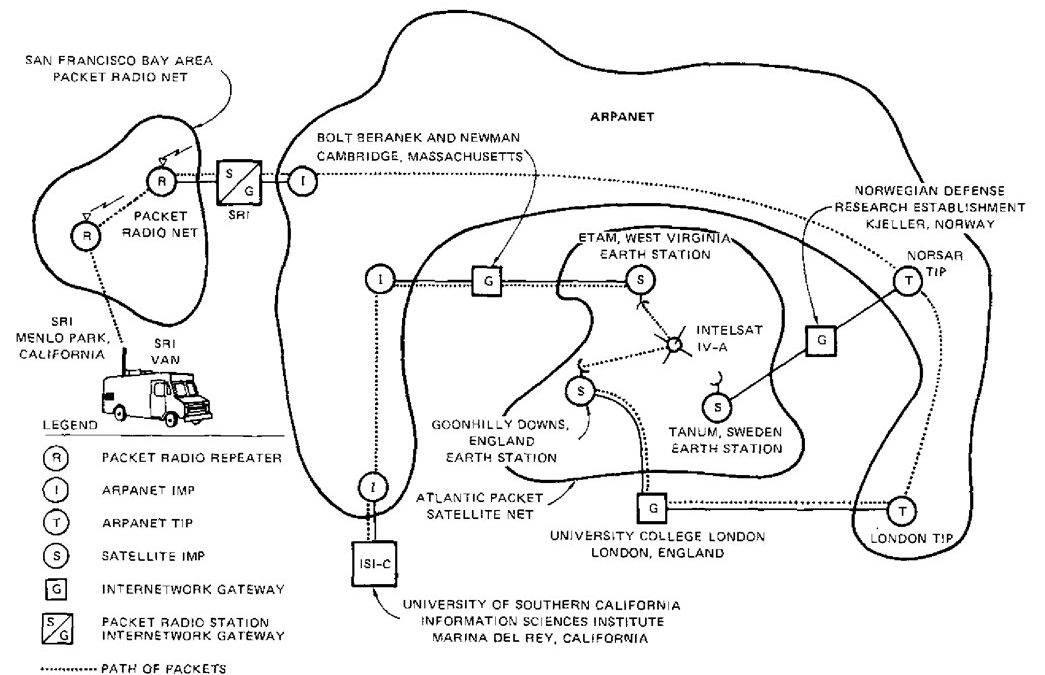
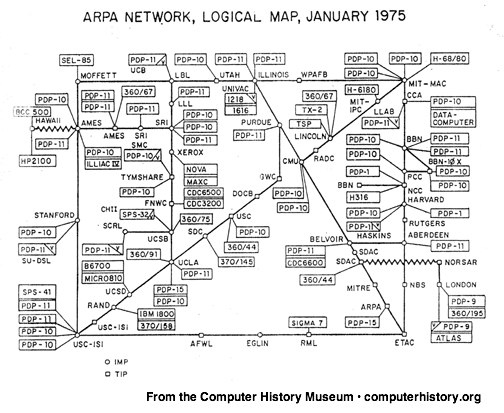
Picturing the Internet in 1981
6 questions to prepare you for a social media crisis

10 ways spam taught us to focus our attention
First seen in 1978, spam has become the vaccine for your attention span. It’s the toxin that has stimulated our immunity system’s defenses. Thanks to spam, we’ve had to find technical, social and personal ways of keeping our eyes on the 22% of e-mail that isn’t pure junk, and to avoid the 78% that is.
10 ways you can help to build the Internet
You can help to create the Internet without writing a single line of code. You can help create the online world in which you and your children are going to live. This post maps out 10 ways you can help with that important and rewarding work.
Dittos remind us of the pleasures of obsolescence
How my custom URL shortener taught me the 10 principles of tech support
The computer that set the standard for tech support in MY house was invented in 1975. Over the years, I’ve come to see that good tech support makes all the difference between having a great time online, and feeling awful every time you switch on a machine.

Waiting for your life online
1974 was the beginning of the end for waiting, as home computer kits and time-sharing systems started to cut into all those hours waiting for the mainframe. Over the years, we wait less and less, as our computers and Internet connections and smartphones get better and better. But waiting may just be something worth waiting for.
7 rules for rule-breakers
The Internet may be based on standards, but it hates rules. Thanks to the Internet we are now faced with almost daily choices about when to obey, and when to defy. If you’re going to be an online rule-breaker (and you probably should be, at least some of the time) these 7 rules can help with your rule-breaking.

1972: ELIZA, IANA and the search for (in)finite attention online
The 1972 Internet gave us ELIZA, a computer therapist, and IANA, which allocates IP addresses. Together they structure our contemporary dilemma: how do we get scarce, human attention in a world of infinite online distraction?
Another view of the Internet in 1971
Rob Cottingham, who was actually around in 1971, remembers the early Internet a little differently. He's annotated the Computer History Museum's 1971 ARPAnet map, which I included in my kick-off on my 40 years of looking back on the Internet: Thanks, Rob, for this...
The Harvard Business Review
Picturing the Internet in 1981
6 questions to prepare you for a social media crisis
10 ways spam taught us to focus our attention
First seen in 1978, spam has become the vaccine for your attention span. It’s the toxin that has stimulated our immunity system’s defenses. Thanks to spam, we’ve had to find technical, social and personal ways of keeping our eyes on the 22% of e-mail that isn’t pure junk, and to avoid the 78% that is.
10 ways you can help to build the Internet
You can help to create the Internet without writing a single line of code. You can help create the online world in which you and your children are going to live. This post maps out 10 ways you can help with that important and rewarding work.
Dittos remind us of the pleasures of obsolescence
How my custom URL shortener taught me the 10 principles of tech support
The computer that set the standard for tech support in MY house was invented in 1975. Over the years, I’ve come to see that good tech support makes all the difference between having a great time online, and feeling awful every time you switch on a machine.
Waiting for your life online
1974 was the beginning of the end for waiting, as home computer kits and time-sharing systems started to cut into all those hours waiting for the mainframe. Over the years, we wait less and less, as our computers and Internet connections and smartphones get better and better. But waiting may just be something worth waiting for.
7 rules for rule-breakers
The Internet may be based on standards, but it hates rules. Thanks to the Internet we are now faced with almost daily choices about when to obey, and when to defy. If you’re going to be an online rule-breaker (and you probably should be, at least some of the time) these 7 rules can help with your rule-breaking.
1972: ELIZA, IANA and the search for (in)finite attention online
The 1972 Internet gave us ELIZA, a computer therapist, and IANA, which allocates IP addresses. Together they structure our contemporary dilemma: how do we get scarce, human attention in a world of infinite online distraction?
Another view of the Internet in 1971
Rob Cottingham, who was actually around in 1971, remembers the early Internet a little differently. He's annotated the Computer History Museum's 1971 ARPAnet map, which I included in my kick-off on my 40 years of looking back on the Internet: Thanks, Rob, for this...
OneZero
Make Peace with Always-On Access
The park ranger who helped us pick out a campsite didn’t know he was giving assistance to the enemy. He…
Lessons for online dating from offline marriage
Readers of this blog know that I am fascinated with online dating, probably the way that women who got married in the 50s were fascinated by the birth control pill. Like the pill, online dating has enabled a revolution in romantic and sexual behaviour, one that those...
8 ways iPhones and iPads affect family discipline
There's nothing like the beginning of a school year to illuminate gaps in your family's, um....discipline. After a couple of rocky weeks inspired us to take a closer look at our family's rhythms and regimes, I found myself noting the central role that iPhones and...

A visual glossary of Drupal field types
This post originally appeared on simcentre.ca. We are currently working with Affinity Bridge on a collaborative research project that has us deeply involved in the process of developing a website on the Drupal content management system (CMS) -- the same CMS that the...

The post-reading generation talks about the future of books
This post originally appeared on SIMCentre.ca. Today I got to be a (tweeting) fly on the wall in Jonathan Aitken's ebook design class. Somewhat to my amusement, Jonathan began by explaining how old people like us used to read in linear way, where you flip through...
How will computer use affect the way people are wired?
I just finished taking the Future of the Internet survey that is run by the Pew Research Center's Internet & American Life Project and Elon University's Imagining the Internet Center. One of the questions asked about the impact of technology use on the kids and...

Social media for political scientists: monitoring with iGoogle, Google Reader and Hootsuite
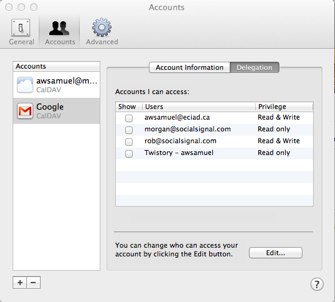
Troubleshooting calendar syncing with Google Calendar, iCal, MobileMe and BusySync
A couple of nights ago I spent an hour cleaning up what I initially alleged to be a problem with Google's calendaring servers, but which closer examination revealed to be a case of user error. And I must reluctantly admit that user was me: in my infinite enthusiasm...
JSTOR DAILY
Make Peace with Always-On Access
The park ranger who helped us pick out a campsite didn’t know he was giving assistance to the enemy. He…
Lessons for online dating from offline marriage
Readers of this blog know that I am fascinated with online dating, probably the way that women who got married in the 50s were fascinated by the birth control pill. Like the pill, online dating has enabled a revolution in romantic and sexual behaviour, one that those...
8 ways iPhones and iPads affect family discipline
There's nothing like the beginning of a school year to illuminate gaps in your family's, um....discipline. After a couple of rocky weeks inspired us to take a closer look at our family's rhythms and regimes, I found myself noting the central role that iPhones and...
A visual glossary of Drupal field types
This post originally appeared on simcentre.ca. We are currently working with Affinity Bridge on a collaborative research project that has us deeply involved in the process of developing a website on the Drupal content management system (CMS) -- the same CMS that the...
The post-reading generation talks about the future of books
This post originally appeared on SIMCentre.ca. Today I got to be a (tweeting) fly on the wall in Jonathan Aitken's ebook design class. Somewhat to my amusement, Jonathan began by explaining how old people like us used to read in linear way, where you flip through...
How will computer use affect the way people are wired?
I just finished taking the Future of the Internet survey that is run by the Pew Research Center's Internet & American Life Project and Elon University's Imagining the Internet Center. One of the questions asked about the impact of technology use on the kids and...
Social media for political scientists: monitoring with iGoogle, Google Reader and Hootsuite
Troubleshooting calendar syncing with Google Calendar, iCal, MobileMe and BusySync
A couple of nights ago I spent an hour cleaning up what I initially alleged to be a problem with Google's calendaring servers, but which closer examination revealed to be a case of user error. And I must reluctantly admit that user was me: in my infinite enthusiasm...
THE VERGE
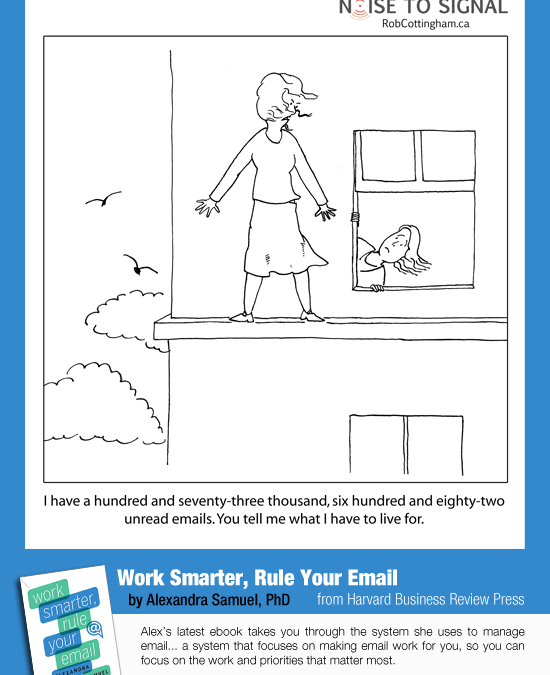
Announcing Work Smarter, Rule Your Email
There's no part of online life that has a bigger impact on our productivity — and our happiness! — than email. But most email productivity guides focus on getting control over email, when what we really need is more control over our lives and our work. That's why I'm...
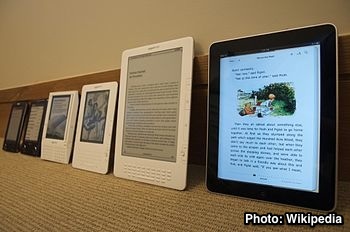
7 ways you can learn to love reading ebooks
About a decade ago, somebody gave us our first crock pot, also known as a slow cooker. For months we feasted on the remarkably easy, delicious dishes it could produce: chicken tagines and chilis, beef briskets and vegan stews. Then I made the mistake of discussing our...

It’s monkey see, monkey do over here
And you know, you usually don't let monkeys hack firmware.
The family that hacks together….
Saturday morning at our house: the kids are programming our new Lego Mindstorms robot. I'm installing Xcode on the Mac home media server...step one in the long road to controlling our Mini with our Kinect.