
Publications
THE WALL STREET JOURNAL

New Communications Forum 2005: Blog University
Snip: Whether it’s the latest news leak, a new outlet for more traditional media, or a discussion about politics, technology, business trends, or a global occurrence, blogs are rapidly becoming an important part of online and in-person discourse. As media companies begin to adopt ways to accommodate this new medium, corporate blogs and blogs authored by individuals are finding a place in this growing online community.
New Communications Forum is an intensive new conference series specifically designed to bring journalists and marketing and PR professionals together to learn how to use new media tools such as blogs, wikis, RSS feeds and podcasting for media communications, corporate branding, marketing communications, public relations and employee communications initiatives. It will provide you with an in-depth, hands-on exploration of the future of communications.
NewComm Forum Europe 2005 will be held on April 5-6, 2005 at Eurodisney in Paris, France

Visualizing change
Friends Ben Banky and Linda Rae pointed me to a web site with amazing panoramas of Vancouver's changing urban landscape, 1978 to 2003. It's a terrific example of how somewhat abstract issues like urban planning can be given an immediate and apprehensible visual...
A quick view of e-consultation
I just came across a very succinct take on the advantages of online consultation. It's from a 2003 paper Beyond Civil Society: Public Engagement Alternatives for Canadian Trade Policy (PDF) by Josh Lerner. Here's how he summarizes the case for e-consultation: Online...

Is podcasting the death of discourse?
Tod Maffin sees podcasting as a way of letting people create “vertical” audio feeds; instead of listening to general interest radio shows like As It Happens, listeners can create their own personal streams of audio, based on their own particular interests. This is just the kind of scenario that makes Cass Sunstein worry about the future of democratic discourse.

Wiki-love
...but the joy of Wiki is that I got to fix the misleading instruction myself, right away.

Down for maintenance
Kudos to the team at Wordpress for their foolproof scheme for backing up Wordpress databases before upgrading. Did I say foolproof? Let me be the fool to take that back. If you're missing all the juicy e-engagement news that's usually here -- not to mention the usual...

Yak shaving etymology
I've finally done something to earn true geek credentials. No, not writing my own applescript (not that hard, actually). Not installing and terminating my own in-wall ethernet network (with brilliant foresight, just 6 months before wireless went consumer-grade). Not...

Conference on Online Deliberation: Stanford, May 2005
The 2nd Conference on Online Deliberation: Design, Research, and Practice will be held May 20-2005 at Stanford University. (Full disclosure: I'm on the organizing committee). The call for proposals asks for abstracts by March 15. A peek at some of the details: We...

Technological leapfrogging
I have a story in today's Toronto Star on Leapfrogging the Technology Gap. The story looks at communities or even whole countries in the developing world that are using information and communication technologies to leapfrog directly from being an agricultural to an...
From diatribe to dialogue
It's been an exciting 48 hours here on alexandrasamuel.com. It's been swell hearing from all the folks who were shocked, outraged or otherwise engaged by my digressions (in November, and this week) on the subject of Condoleezza Rice's political science career, but I...
The Harvard Business Review
New Communications Forum 2005: Blog University
Snip: Whether it’s the latest news leak, a new outlet for more traditional media, or a discussion about politics, technology, business trends, or a global occurrence, blogs are rapidly becoming an important part of online and in-person discourse. As media companies begin to adopt ways to accommodate this new medium, corporate blogs and blogs authored by individuals are finding a place in this growing online community.
New Communications Forum is an intensive new conference series specifically designed to bring journalists and marketing and PR professionals together to learn how to use new media tools such as blogs, wikis, RSS feeds and podcasting for media communications, corporate branding, marketing communications, public relations and employee communications initiatives. It will provide you with an in-depth, hands-on exploration of the future of communications.
NewComm Forum Europe 2005 will be held on April 5-6, 2005 at Eurodisney in Paris, France
Visualizing change
Friends Ben Banky and Linda Rae pointed me to a web site with amazing panoramas of Vancouver's changing urban landscape, 1978 to 2003. It's a terrific example of how somewhat abstract issues like urban planning can be given an immediate and apprehensible visual...
A quick view of e-consultation
I just came across a very succinct take on the advantages of online consultation. It's from a 2003 paper Beyond Civil Society: Public Engagement Alternatives for Canadian Trade Policy (PDF) by Josh Lerner. Here's how he summarizes the case for e-consultation: Online...
Is podcasting the death of discourse?
Tod Maffin sees podcasting as a way of letting people create “vertical” audio feeds; instead of listening to general interest radio shows like As It Happens, listeners can create their own personal streams of audio, based on their own particular interests. This is just the kind of scenario that makes Cass Sunstein worry about the future of democratic discourse.
Wiki-love
...but the joy of Wiki is that I got to fix the misleading instruction myself, right away.
Down for maintenance
Kudos to the team at Wordpress for their foolproof scheme for backing up Wordpress databases before upgrading. Did I say foolproof? Let me be the fool to take that back. If you're missing all the juicy e-engagement news that's usually here -- not to mention the usual...
Yak shaving etymology
I've finally done something to earn true geek credentials. No, not writing my own applescript (not that hard, actually). Not installing and terminating my own in-wall ethernet network (with brilliant foresight, just 6 months before wireless went consumer-grade). Not...
Conference on Online Deliberation: Stanford, May 2005
The 2nd Conference on Online Deliberation: Design, Research, and Practice will be held May 20-2005 at Stanford University. (Full disclosure: I'm on the organizing committee). The call for proposals asks for abstracts by March 15. A peek at some of the details: We...
Technological leapfrogging
I have a story in today's Toronto Star on Leapfrogging the Technology Gap. The story looks at communities or even whole countries in the developing world that are using information and communication technologies to leapfrog directly from being an agricultural to an...
From diatribe to dialogue
It's been an exciting 48 hours here on alexandrasamuel.com. It's been swell hearing from all the folks who were shocked, outraged or otherwise engaged by my digressions (in November, and this week) on the subject of Condoleezza Rice's political science career, but I...
OneZero

Dreamhost goes green
I’ve just discovered that Dreamhost, which we use to host all of our personal sites, is carbon neutral. They’re buying carbon credits so that their users can proudly note that they have carbon neutral sites. Bravo, Dreamhost.

Notes vs posted items
I’d love input from other folks on how they use posted items.
UPDATE: OK, I think the solution is to NEVER post a note. That way I can set my blog to aggregate both my Notes (i.e. my Facebook blog) and my Posted items (i.e. links/photos I’ve shared).
And I’m tagging “facebook” as a friend in this note, so I can see how my aggregator handles that inbound tag.

Facebook vs twitter
I’m now looking for a Facebook status updater that’s as convenient as Twitterbar (which lets me type my status directly into my browser’s address bar, then press a little + sign to post.)

twitterfeed.com : feed your blog to twitter

Twitterbook: Update Twitter using Facebook Status | Design Meme


Facebook mobile
This is definitely the use case for paying fido $10/mo to cover the cost of 1,000 msgs.

Looking for Oberlin alumni in social media/nonprofit technology
I’ve just started a facebook group for Oberlin Alumni in Social Technology” — either nonprofit technology specifically, or social media more generally. I have this theory that the nptech scene must include a fair number of Obies, and I’d love to connect with them. So I’m starting the hunt, and hoping I might even surface some fellow alums who will be at the upcoming NTEN conference in DC. If you’re an Obie and you’re reading this, please join the Facebook group or post a comment here.

John Hagel on expanding markets through virtual communities
I'm writing this from the Community 2.0 conference, which promises to be two great days of inspiration on online community building and management. It got off to a great start with a presentation by John Hagel on "What's Possible? Expanding Markets through Virtual Communities".
Here are some of the highlights of John's talk:
How do we create effective online community?Â
- What do we mean by community?
- What skill sets are needed?
- What mind shifts are needed?
- What organizational structure is needed?
1. What is community?
There's a tendency to regard anything that's interaction as community.
The emphasis of real community establish connections among people so they can participate in shared discussions over time, leading to a complex web of relationships, and to an increased identification with the overall community.
The key to real community:
- shared discussions
- shared relationships
- shared identity
There's an inexorable desire for these communities to meet in physical space as well, and over time the virtual and physical communities get woven together.
2. What skill sets (culture sets) are needed?
- Creating content.
- Structuring/catalyzing social interactions in a way that promotes enduring relationships.
- Economic business models. How to sustain over time.
- [My note: technical skills/culture is a fourth important set, and needs to be integrated with the first three.]
Communities typically start from one of these skill sets.
3. What mind shifts are needed?
- Need to be participant-centric. I often hear questions about what's the value to the company of doing this; but not about the value to participants.
- Need to think long-run. People think too short term.
- Need to move from top-down organizational perspective to bottom-up perspective. Need to give up control.
4. What organizational structure is needed?
Key issues:
- Who is responsible for community initiatives and do they have the authority to mobilize the resources needed to make community work? Do they have the appropriately broad perspective? Even if they're senior, they may be too narrowly focused on marketing or another narrow area — and that narrows community to the functional area of the person in charge?
- How do they define success? Too often there's not even a definition of success. What are the operational metrics. Are there systematic reviews to enhance performance over time?
- Who has the relevant experience in the organization and are they being mobilized into the community?
What value do businesses get from online community?
ROA: Return on Attention
Participants should ask themselves: What is the value I derive from the attention I put into and receive from this community? ALWAYS focus on ROA from participant viewpoint first. Organization can then look at the ROA for their own org. How much did it cost to catch the participants' attention, and how much value did that attention deliver to the organization AND to the participants.
A small proportion of your customers deliver the majority of your value. How do you get them more engaged? And how do you take the less profitable customers and make them more valuable thanks to their communtiy experiences?
How do I create environments to provide resources participants didn't even know existed, let alone searched for, but which are valuable and relevant to them? This is the highest value return on attention.
Recommends Peter Moorville's Ambient Findability. Powerful way to think about return on attention. While most people think about usability, usability presumes findability. Have to figure out first how they can find you. Hagel says findability=fundability.
ROI: Return on information
where information = information on participants
Look at ROI initially from participant viewpoint, then from provider/organizer viewpoint.
From participant perspective: how much info have I shared, and how much effort did it take to share it? And how much value did I receive from sharing that info?
From organizational perspective: How much info did I receive from participants, and how much value was I able to generate — for myself and for participants — from that information?
Organizations are investing a lot in collecting info but aren't thinking much about how to use it.
How can we be more helpful to participants by providing resources based on their profiles/behavior?
How can we shorten cycle between when participants provide info and when they get value back? That's key to motivating participation.
ROS: Return on skills
For participants:Â skills from participating in these communities
For organizers: am I able to attract and retain the most valuable contributors?
Distinguish between communities of interest and communities of practice.
In COPs, focus on places where people are coming together to generate work product, eg in open source software communities. Expects COIs and COPS to start converging. As we face more pressure to deepen our skills and increase value delivered from their skills, I see increased tendency for people to make their passions their professions,b/c you're more likely to develop skills where you feel passion. Likely to seek out communities where people develop their talents while engaging with their passions.
JSTOR DAILY
Dreamhost goes green
I’ve just discovered that Dreamhost, which we use to host all of our personal sites, is carbon neutral. They’re buying carbon credits so that their users can proudly note that they have carbon neutral sites. Bravo, Dreamhost.
Notes vs posted items
I’d love input from other folks on how they use posted items.
UPDATE: OK, I think the solution is to NEVER post a note. That way I can set my blog to aggregate both my Notes (i.e. my Facebook blog) and my Posted items (i.e. links/photos I’ve shared).
And I’m tagging “facebook” as a friend in this note, so I can see how my aggregator handles that inbound tag.
Facebook vs twitter
I’m now looking for a Facebook status updater that’s as convenient as Twitterbar (which lets me type my status directly into my browser’s address bar, then press a little + sign to post.)
twitterfeed.com : feed your blog to twitter
Twitterbook: Update Twitter using Facebook Status | Design Meme
Facebook mobile
This is definitely the use case for paying fido $10/mo to cover the cost of 1,000 msgs.
Looking for Oberlin alumni in social media/nonprofit technology
I’ve just started a facebook group for Oberlin Alumni in Social Technology” — either nonprofit technology specifically, or social media more generally. I have this theory that the nptech scene must include a fair number of Obies, and I’d love to connect with them. So I’m starting the hunt, and hoping I might even surface some fellow alums who will be at the upcoming NTEN conference in DC. If you’re an Obie and you’re reading this, please join the Facebook group or post a comment here.
John Hagel on expanding markets through virtual communities
I'm writing this from the Community 2.0 conference, which promises to be two great days of inspiration on online community building and management. It got off to a great start with a presentation by John Hagel on "What's Possible? Expanding Markets through Virtual Communities".
Here are some of the highlights of John's talk:
How do we create effective online community?Â
- What do we mean by community?
- What skill sets are needed?
- What mind shifts are needed?
- What organizational structure is needed?
1. What is community?
There's a tendency to regard anything that's interaction as community.
The emphasis of real community establish connections among people so they can participate in shared discussions over time, leading to a complex web of relationships, and to an increased identification with the overall community.
The key to real community:
- shared discussions
- shared relationships
- shared identity
There's an inexorable desire for these communities to meet in physical space as well, and over time the virtual and physical communities get woven together.
2. What skill sets (culture sets) are needed?
- Creating content.
- Structuring/catalyzing social interactions in a way that promotes enduring relationships.
- Economic business models. How to sustain over time.
- [My note: technical skills/culture is a fourth important set, and needs to be integrated with the first three.]
Communities typically start from one of these skill sets.
3. What mind shifts are needed?
- Need to be participant-centric. I often hear questions about what's the value to the company of doing this; but not about the value to participants.
- Need to think long-run. People think too short term.
- Need to move from top-down organizational perspective to bottom-up perspective. Need to give up control.
4. What organizational structure is needed?
Key issues:
- Who is responsible for community initiatives and do they have the authority to mobilize the resources needed to make community work? Do they have the appropriately broad perspective? Even if they're senior, they may be too narrowly focused on marketing or another narrow area — and that narrows community to the functional area of the person in charge?
- How do they define success? Too often there's not even a definition of success. What are the operational metrics. Are there systematic reviews to enhance performance over time?
- Who has the relevant experience in the organization and are they being mobilized into the community?
What value do businesses get from online community?
ROA: Return on Attention
Participants should ask themselves: What is the value I derive from the attention I put into and receive from this community? ALWAYS focus on ROA from participant viewpoint first. Organization can then look at the ROA for their own org. How much did it cost to catch the participants' attention, and how much value did that attention deliver to the organization AND to the participants.
A small proportion of your customers deliver the majority of your value. How do you get them more engaged? And how do you take the less profitable customers and make them more valuable thanks to their communtiy experiences?
How do I create environments to provide resources participants didn't even know existed, let alone searched for, but which are valuable and relevant to them? This is the highest value return on attention.
Recommends Peter Moorville's Ambient Findability. Powerful way to think about return on attention. While most people think about usability, usability presumes findability. Have to figure out first how they can find you. Hagel says findability=fundability.
ROI: Return on information
where information = information on participants
Look at ROI initially from participant viewpoint, then from provider/organizer viewpoint.
From participant perspective: how much info have I shared, and how much effort did it take to share it? And how much value did I receive from sharing that info?
From organizational perspective: How much info did I receive from participants, and how much value was I able to generate — for myself and for participants — from that information?
Organizations are investing a lot in collecting info but aren't thinking much about how to use it.
How can we be more helpful to participants by providing resources based on their profiles/behavior?
How can we shorten cycle between when participants provide info and when they get value back? That's key to motivating participation.
ROS: Return on skills
For participants:Â skills from participating in these communities
For organizers: am I able to attract and retain the most valuable contributors?
Distinguish between communities of interest and communities of practice.
In COPs, focus on places where people are coming together to generate work product, eg in open source software communities. Expects COIs and COPS to start converging. As we face more pressure to deepen our skills and increase value delivered from their skills, I see increased tendency for people to make their passions their professions,b/c you're more likely to develop skills where you feel passion. Likely to seek out communities where people develop their talents while engaging with their passions.
THE VERGE

Twitter makes jet lag even more painful
It was 3 in the afternoon, but it could have been 3 in the morning to judge from the exhausted faces of a roomful of entrepreneurs. These entrepreneurs constitute the up-and-coming generation of businesses in Cluj, Romania, and I had just spent the day talking them...

How many e-mail clients do you need?
Jodie Tonita is a lovely person. She is passionate, funny, kind to children and small animals, and an amazing hula-hooper. Unfortunately she was sent by our alien overlords to ensure I never do my actual work. As evidence, check out this message Jodie left on my...
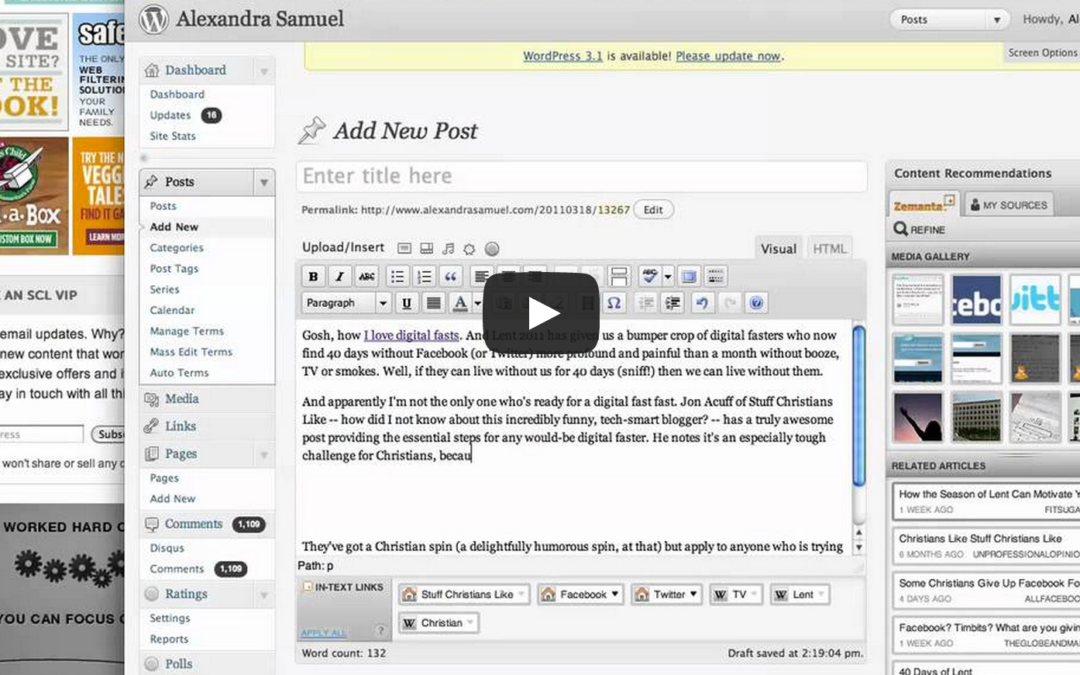
How to write a blog post in 10 minutes

For Lent, I’ve decided to give up reading about digital fasts
Gosh, how I love digital fasts. And Lent 2011 has given us a bumper crop of digital fasters who now find 40 days without Facebook (or Twitter) more profound and painful than a month without booze, TV or smokes. Well, if they can live without us for 40 days (sniff!)...